
Abdulmueed Balogun Adewale
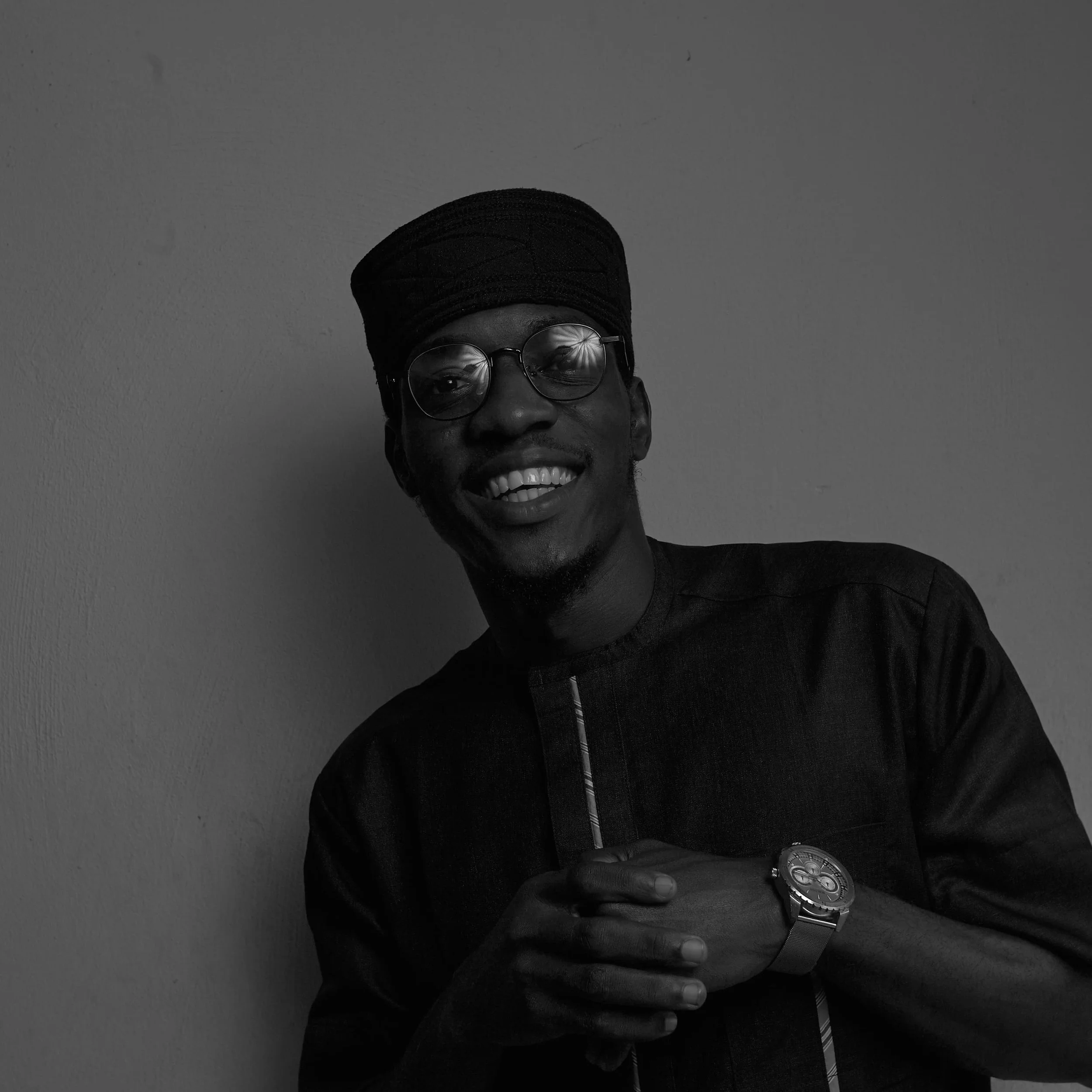
ORP: What inspired you to begin writing or creating? Has that source of inspiration changed throughout your life?
Abdulmueed Balogun Adewale: What inspired me to begin writing was pain, and the urgent need to escape it. The inspiration hasn't really changed. I still write from a place of pain, I just think, it's no longer as intense. Also, following a series of comments on the darkness of my poems, and the seeming need to outrun the ghost of my past, I have been making conscious attempts to write from a place of light.
ORP: Do you write or create with an audience in mind? If so, how do you consider the relationship between that audience and your work throughout your creative process?
ABA: I'm divided on this. Sometimes, I write just for myself, to rid my chest of everything that's convulsive and breath-stifling. Whenever I'm in this state, I just want to write for the sake of it, not to appeal to anyone but myself, to give wings to the whisperings in head, a stage to the voices seeking a medium to be heard. But when I'm writing with an audience in mind, I am often torn, between how to and am I doing it right? These two imposters never cease tormenting throughout the process of writing. I struggle with the urge of appearing perfect and making no mistake. However, I have given myself the grace to fall and God's been blessing me, every time, I falter, with the strength to rise. So, the relationship between that audience and my work is something, I really don't ponder on much again as I used to. I feel if the poem is tasty or not, I shouldn't be the judge of that, I leave that at the discretion of the audience.
ORP: What does success as a writer or artist mean to you?
ABA: I have always been a poet that wants his poems to outlive him. I want my poems to have the fierceness of eternity, only then can they stand the test of time. So, for me, to be successful as a poet is to write poems whose prints won't fade on the sand of time.
ORP: Who do you consider to be your creative ancestors and contemporaries for your art and/or writing? How does your creative work converse with theirs?
ABA: A lot of them. I adore a great deal of writers. David Diop, Kwesi Brew, Leopold Senghor, Kofi Awoonor, Khalil Gibran, Oswald Mtshali, Mahmoud Darwish, Akeem Lasisi, Rasaq Malik, Rumi, Niyi Osundare, Pablo Neruda, Billy Collins and lots more. These poets have really influenced my craft. Sometimes, our themes intersect and occasionally, when I'm in a tight position, I tend to ask myself, how will a certain poet, finish this poem, or how will he say this or would he have used a metaphor here in place of a simile.
ORP: Does writing or creating energize or exhaust you? What aspects of your artistic process would you consider the most challenging or rewarding?
ABA: It energizes me. For me, writing is therapeutic. After concluding a poem, if feel the mountains in my chest crumble. The most challenging aspect of it, is definitely getting the first line in. I'm always puzzled on how to start.
ORP:Do you know more than one language? How does this influence your art and/or writing?
ABA: Yes. I'm bilingual. Although, I still want to extend beyond those two: Yoruba and English. I can read Arabic and communicate with it, at a beginner's level. I hope to strengthen that over time. My indigenous language, Yoruba, does influence my craft. Sometimes, I make of adages in my poems and label things out, occasionally, cloaked in it.